How to Choose the Right Asset Management Services for Your Advisory Firm
Learn what asset management services include and how to choose the right asset manager for your advisory firm.
.png?width=258&height=145&name=Helios%20Web%20Images%20800x450%20(9).png)
How Advisors Can Use Market Commentary to Strengthen Client Relationships — Not Overwhelm Them
10 min read

Virtual asset management enables financial advisors to deliver institutional investment management through technology-enabled workflows, remote portfolio oversight, and digital collaboration. It helps advisory firms manage research, portfolio management, and investment governance more efficiently while supporting clients regardless of location.
As advisory firms grow, maintaining a consistent investment process becomes increasingly difficult. According to the 2025 Charles Schwab RIA Benchmarking Study, 78% of firms added staff in 2024, while recruiting talent ranked as their second-highest strategic priority. The findings highlight the operational pressures facing growing RIAs and the need for investment models that support growth without relying solely on additional hiring.
Virtual asset management addresses that challenge by creating structured investment workflows, improving collaboration, and standardizing portfolio oversight across advisors and teams. The firms that benefit most are those that combine technology with disciplined investment governance, documented processes, and a scalable operating model that can support long-term growth.
Virtual asset management is most effective when it's built on disciplined investment research, portfolio oversight, and clearly documented governance. Our Outsourced CIO Services help advisory firms strengthen these capabilities through institutional portfolio management, ongoing investment oversight, and scalable workflows that integrate seamlessly into technology-enabled advisory practices.
Virtual asset management is the delivery of investment management services through technology-enabled collaboration rather than relying exclusively on in-person meetings and centralized investment teams. It allows financial advisors to work with investment professionals remotely while maintaining consistent portfolio oversight, investment governance, and client service.
For advisory firms, virtual asset management is not simply about using video calls or digital platforms. It is an operating model that supports investment research, portfolio construction, trading, performance monitoring, and ongoing advisor collaboration through structured digital workflows. Advisors continue to guide client relationships and financial planning while leveraging technology to improve investment operations and communication.
As firms grow, this approach becomes increasingly valuable. Investment committees may operate across multiple offices, portfolio reviews can be conducted remotely, and investment decisions can be documented and communicated more efficiently without sacrificing accountability. Virtual collaboration also gives advisory firms access to specialized investment resources that might otherwise require significant internal hiring or operational expansion.
Read Next: Investment Process Documentation: The Missing Link Between Performance and Governance
Although both approaches share the same objective of delivering disciplined portfolio management, the way they operate can differ significantly.
Virtual asset management does not replace personal relationships or investment discipline. It enhances how investment decisions are researched, implemented, documented, and communicated, allowing advisory firms to maintain a consistent investment process while improving operational efficiency and scalability.
Virtual asset management connects investment research, portfolio management, and advisor collaboration through structured digital workflows. Rather than relying on manual processes or in-person coordination, advisory firms can standardize how investment decisions are researched, implemented, monitored, and communicated across their organization.
While every firm's process will vary, most virtual asset management models include the following core components:
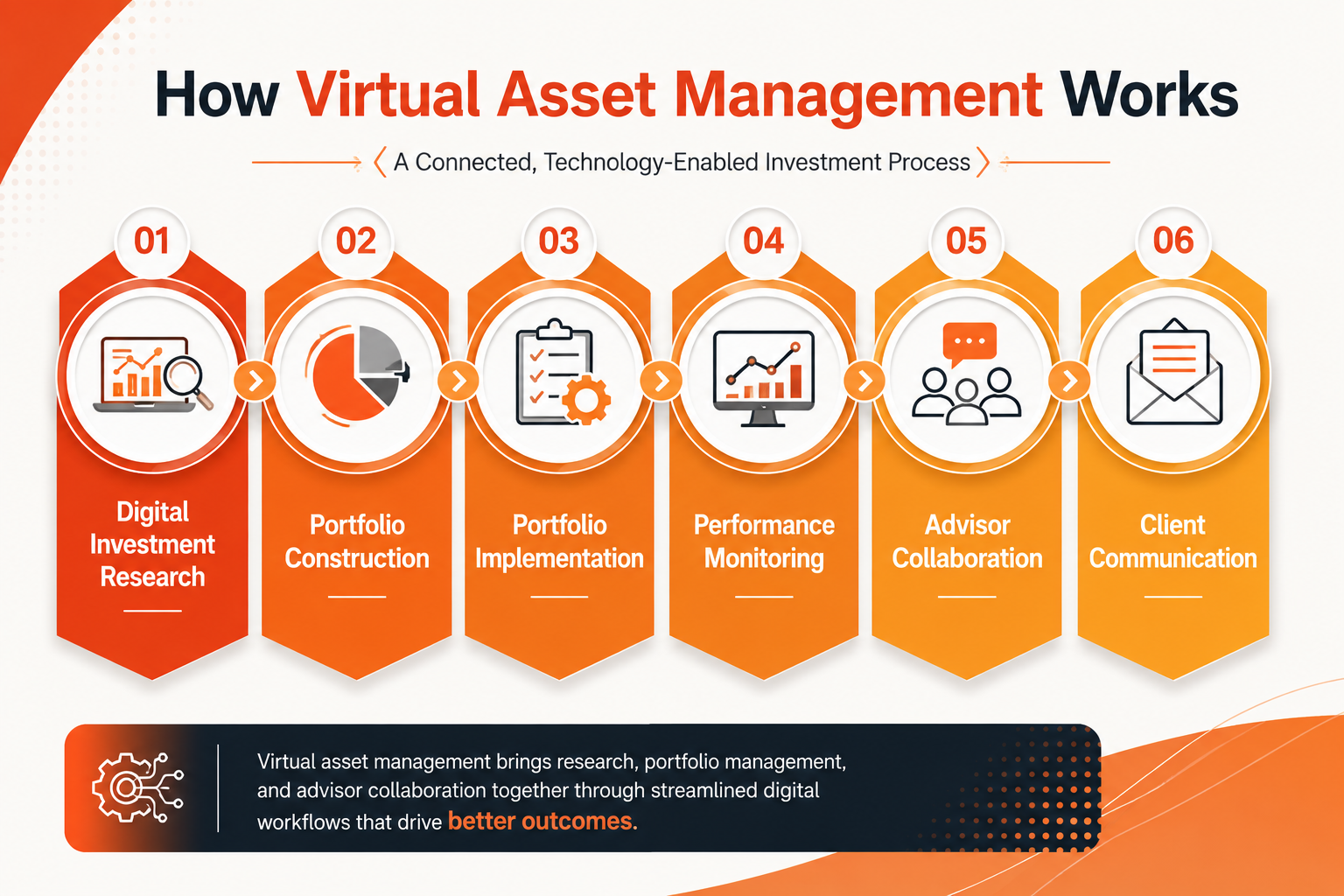
Digital Investment Research
Centralize market research, investment analysis, and due diligence through shared platforms that allow investment teams to evaluate opportunities and monitor existing holdings more efficiently.
Portfolio Construction
Develop model portfolios and asset allocation strategies within a standardized investment framework to promote consistency across client accounts while supporting each client's objectives and risk profile.
Portfolio Implementation
Execute trades, portfolio rebalancing, and model updates through documented digital workflows that improve efficiency while maintaining investment oversight and operational controls.
Performance Monitoring
Continuously review portfolio performance, allocation drift, risk exposures, and investment objectives to identify meaningful changes and support informed investment decisions.
Advisor Collaboration
Enable financial advisors, portfolio managers, and investment professionals to review portfolios, discuss strategy, and document decisions through secure virtual collaboration.
Client Communication
Share portfolio updates, investment commentary, and review materials through digital channels that help advisors maintain responsive, consistent communication regardless of location.
Together, these capabilities create a connected investment process that improves consistency, strengthens governance, and allows advisory firms to scale investment management without increasing operational complexity.
Read More: 7 Proven Ways to Improve Investment Process in Wealth Management
Virtual asset management does more than make investment teams more connected. It creates a more structured operating model that helps advisory firms manage portfolios consistently, strengthen investment governance, and improve collaboration across advisors, investment professionals, and operations teams. As firms grow, these capabilities become increasingly important for maintaining service quality without adding unnecessary operational complexity.
The greatest benefit of virtual asset management is not the technology itself. It is the ability to build a repeatable investment process that supports growth while maintaining consistent portfolio oversight, governance, and advisor collaboration. Firms that establish these operational foundations are often better positioned to scale without compromising the quality of their investment management or client experience.
Read Next: Scaling Capacity Without Compromise: How Fast-Growing Advisors Reclaim Their Time
Virtual asset management is not reserved for large advisory firms or enterprise wealth management organizations. It can benefit firms of many sizes, provided the objective is to strengthen investment management, improve operational efficiency, and build a more scalable advisory practice.
While every firm's needs are different, virtual asset management is often a strong fit in the following situations.
As assets under management and client relationships expand, investment operations become more demanding. Virtual asset management helps RIAs standardize portfolio management, improve collaboration, and support additional growth without rebuilding their investment process from the ground up.
When multiple advisors contribute to investment decisions, maintaining consistency becomes more challenging. Shared investment workflows, centralized portfolio oversight, and documented governance help ensure clients receive a consistent experience regardless of which advisor they work with.
Virtual collaboration allows advisors and investment professionals to work together without depending on a single office. Portfolio reviews, investment committee meetings, and ongoing advisor services can be coordinated through secure virtual platforms while preserving accountability and communication.
Many advisory firms now combine face-to-face meetings with virtual communication to better serve clients. Virtual asset management complements this approach by supporting digital portfolio management, remote investment reviews, and ongoing collaboration while allowing advisors to continue delivering personalized financial guidance.
Independent advisors who want to strengthen investment research, portfolio oversight, or investment governance may benefit from partnering with an external investment team. This approach allows advisors to remain focused on financial planning, client relationships, and long-term financial goals while leveraging institutional investment expertise behind the scenes.
The common thread is not firm size. It is the investment process maturity. Firms often gain the greatest value from virtual asset management when they need a more structured operating model that supports growth, strengthens governance, and delivers consistent investment management as client needs become more complex.
Read More: How to Know If OCIO Solutions Make Sense for Your Advisory Firm
Not all virtual asset management providers offer the same level of investment expertise, operational support, or advisor collaboration. While technology enables remote investment management, the long-term value of a partner depends on the quality of its investment process, governance framework, and ability to support your firm's growth.
When evaluating virtual asset management providers, consider the following factors:
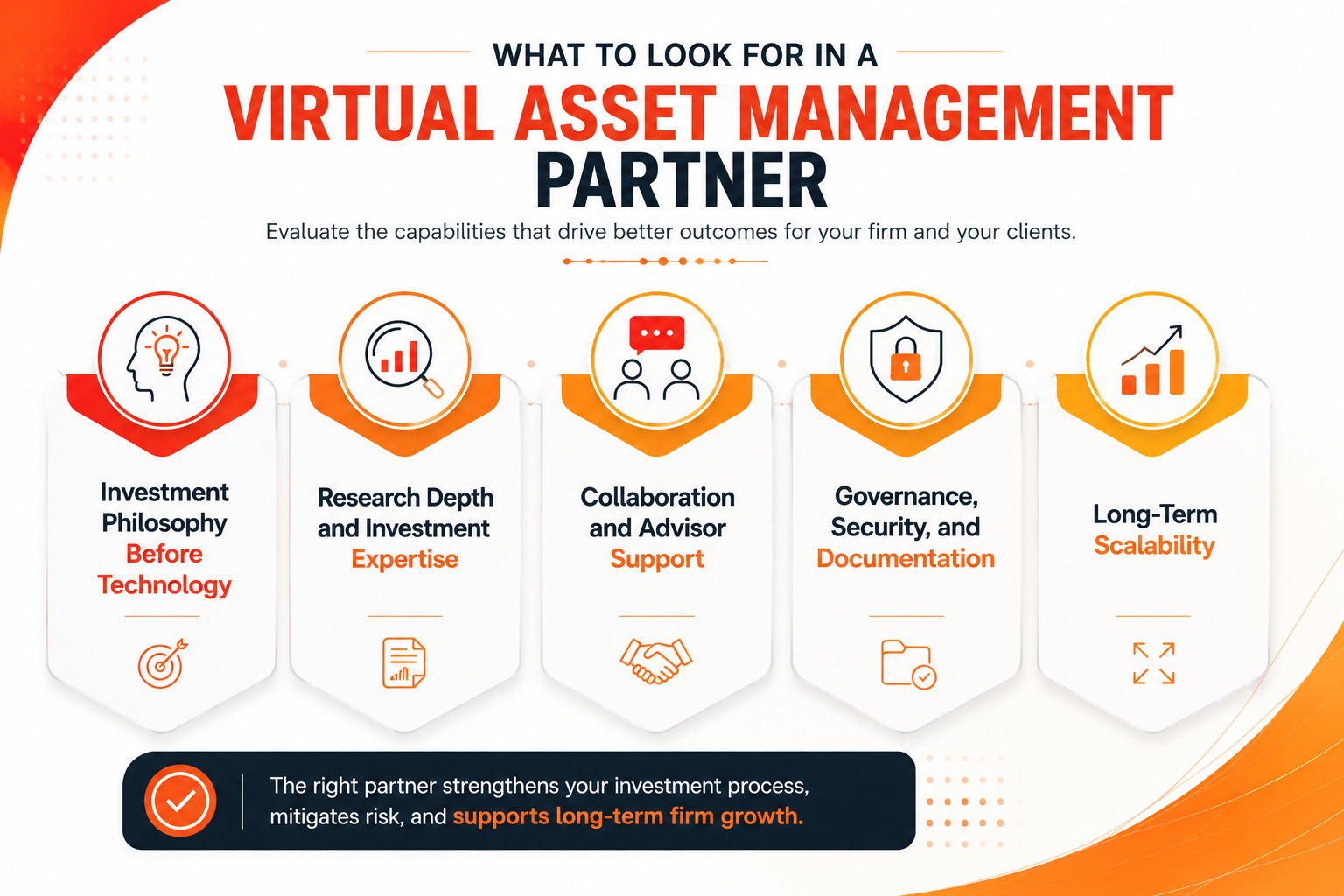
Technology should support a disciplined investment process, not define it. Evaluate whether the provider has a clearly documented investment philosophy, consistent portfolio construction methodology, and structured approach to investment decision-making. Strong virtual advisory services begin with a repeatable investment framework.
Assess how investment research is conducted, documented, and incorporated into portfolio decisions. Look for providers that combine quantitative analysis, market research, portfolio monitoring, and ongoing due diligence rather than relying solely on automated portfolio management or model updates.
Virtual asset management should make collaboration easier, not more complicated. Review how advisors communicate with investment professionals, schedule consultations, access portfolio updates, and participate in investment discussions. The strongest providers support ongoing advisor relationships through responsive communication and clearly defined service models.
Technology introduces efficiency, but governance creates consistency. Evaluate how investment decisions are documented, how portfolio changes are approved, how financial information is protected, and how the provider maintains accountability across its investment process. A mature governance framework supports both operational resilience and fiduciary responsibilities.
Select a partner that can support your firm as it grows. Consider whether its management platforms, reporting capabilities, advisor services, and investment resources can scale alongside your business without requiring major operational changes in the future.
Choosing a virtual asset management partner is ultimately about more than technology. The right relationship should strengthen your investment process, improve operational consistency, and provide the infrastructure needed to support long-term growth while preserving the client experience that defines your advisory firm.
At Helios, we work with advisory firms that want to modernize investment management without changing the investment philosophy that differentiates their practice. Through our Outsourced CIO Services, we provide institutional investment research, portfolio management, governance, and ongoing advisor support that integrate seamlessly into technology-enabled advisory workflows.
Read Next: What Actually Matters When Choosing an Outsourced CIO Firm
Virtual asset management can improve investment efficiency and advisor collaboration, but technology alone does not create a stronger investment process. Firms that successfully implement virtual operating models typically focus as much on governance, communication, and operational discipline as they do on digital tools.
The following challenges are common as advisory firms transition to more technology-enabled investment management.
Most implementation challenges are operational rather than technological. Advisory firms that define clear responsibilities, standardize investment workflows, and maintain consistent oversight are generally better positioned to realize the long-term benefits of virtual asset management. The focus should remain on building an investment process that supports advisors, strengthens governance, and scales alongside the firm's growth.
Read More: The Strategic Advantage of Outsourced Investment Committees
Virtual asset management reflects a broader shift in how advisory firms deliver investment management. As firms grow, investment oversight, portfolio management, and advisor collaboration become more difficult to manage through traditional office-based workflows alone. Technology-enabled operating models help firms support these responsibilities more efficiently while maintaining consistent governance and investment discipline.
For many advisory firms, the value extends beyond technology. Standardized investment workflows, centralized portfolio oversight, and virtual collaboration create a more scalable investment process that can support additional advisors, clients, and assets under management without increasing operational complexity.
At Helios, we help advisory firms strengthen these capabilities through our Outsourced CIO Services, combining institutional investment research, portfolio management, governance, and ongoing advisor support with technology-enabled investment workflows. The result is an investment process designed to grow alongside your firm while allowing advisors to remain focused on serving their clients.
Read Next: Investment Management Outsourcing: When It Becomes a Strategic Advantage
Virtual asset management is changing how advisory firms deliver investment management, but its value extends well beyond technology. At its core, it provides a more structured and scalable way to manage research, portfolio oversight, investment governance, and advisor collaboration as firms continue to grow.
Key Takeaways
Virtual asset management supports a more consistent and scalable investment process.
Technology is most effective when paired with disciplined governance and documented workflows.
The right partner should strengthen your investment process, not simply provide another technology platform.
A scalable investment operating model creates greater capacity for advisors while supporting long-term firm growth.
Whether you're refining your existing investment process or evaluating new operating models, the goal should be the same: build an investment framework that can support future growth without compromising consistency, governance, or the client experience.
Ready to modernize your investment process? Contact Helios to learn how our technology-enabled investment management solutions can help your firm scale with confidence.
Virtual asset management focuses on delivering investment management through technology-enabled research, portfolio oversight, and investment governance. A virtual financial advisor or virtual advisor works directly with clients through video meetings, phone or email, and secure digital platforms to provide financial advice, financial planning services, and ongoing relationship management.
No. An online financial advisor primarily changes how clients communicate with their advisor, while virtual asset management changes how investment management is delivered behind the scenes. Many advisory firms combine virtual advisory services with in-person meetings to create a hybrid financial planning experience that improves both operational efficiency and client service.
Yes. Virtual asset management strengthens the investment side of the advisory relationship while allowing advisors to continue delivering a comprehensive financial plan, retirement planning, estate planning, and other financial planning and wealth management services. It complements, rather than replaces, the broader financial planning process.
Before hiring a virtual asset management partner, evaluate the firm's investment philosophy, research capabilities, governance standards, management platforms, cybersecurity practices, advisor support, and long-term scalability. The objective is to find an investment partner that strengthens your investment process while fitting your firm's operating model and client relationships.
Virtual asset management helps advisors deliver more consistent wealth management by improving portfolio oversight, investment research, and investment governance. This creates more capacity for financial advisors to focus on financial guidance, personalized client relationships, and helping clients achieve their long-term financial goals.
No. Virtual asset management is designed to support, not replace, the role of a traditional advisor or investment advisor. Technology improves collaboration, documentation, and portfolio management, while advisors continue providing personalized financial advice, overseeing client relationships, and guiding important financial decisions.
If you're looking to find a virtual financial advisor or evaluate virtual asset management providers, focus on investment expertise rather than technology alone. The strongest partners combine disciplined investment research, institutional portfolio management, governance, and responsive advisor services with secure digital collaboration. Rather than searching for the best online financial advisor, evaluate whether the provider can support your firm's long-term growth, investment philosophy, and operational needs.
Yes. Modern wealth management platforms and virtual management platforms are designed to support firms serving clients with diverse financial situations and varying levels of financial complexity. When paired with a disciplined investment process, they help advisory firms deliver consistent portfolio oversight while maintaining the flexibility needed to address each client's unique financial needs.

Learn what asset management services include and how to choose the right asset manager for your advisory firm.

Learn how to choose a white label investment platform that supports scalable portfolio management, governance, branding, and long-term RIA growth.

Explore how advisors outsource investment management, compare asset management platforms, and evaluate portfolio support options.